
Disc Injury Treatment in Traverse City, MI
A disc injury can be one of the most painful and debilitating spinal conditions a person experiences — but it doesn’t have to mean surgery, long-term medication, or a permanent change in your quality of life. At Pathways Chiropractic, we specialize in the conservative, non-surgical treatment of disc injuries using evidence-based chiropractic care that targets the root cause of your pain, restores spinal motion, and supports the natural healing process. Call (231) 252-4249 to schedule your evaluation in Traverse City, MI today.
Understanding Disc Injuries: Types and Causes
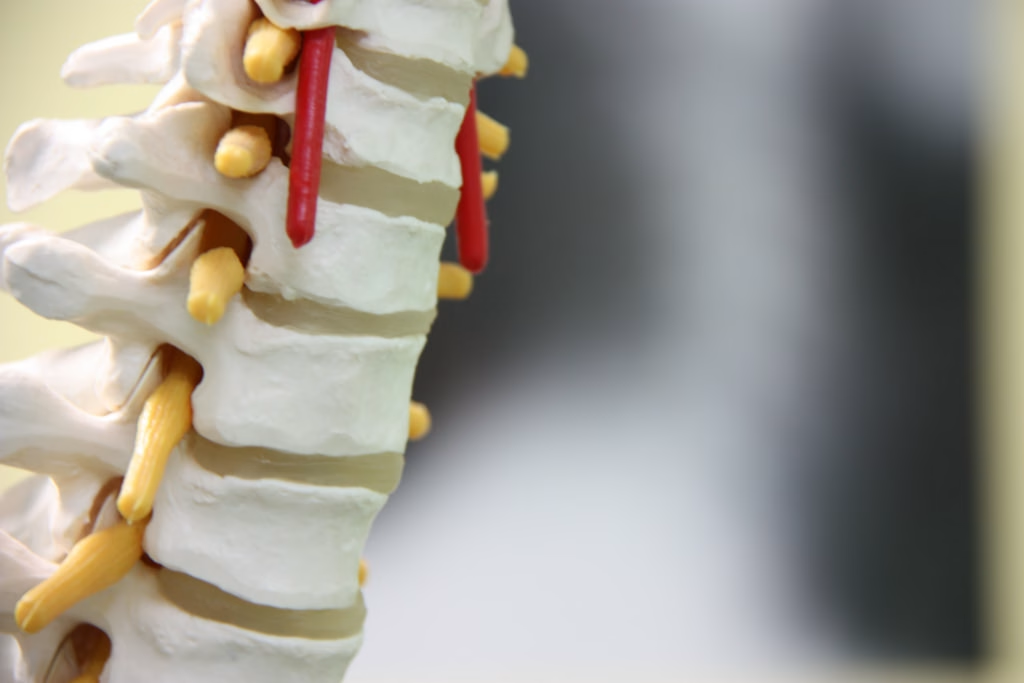
The intervertebral discs are the shock-absorbing structures that sit between each pair of vertebrae in the spine. Each disc has a tough outer ring called the annulus fibrosus and a soft, gel-like center called the nucleus pulposus. Together, they cushion the vertebrae from impact, allow spinal flexibility, and help maintain the height and spacing between spinal segments. When a disc is injured — whether from acute trauma, repetitive stress, or gradual degeneration — it can produce significant pain and neurological symptoms that affect both the local spine and the limbs.
There are several distinct types of disc injury, ranging in severity:
Disc Bulge (Disc Protrusion): The gel inside the disc shifts unevenly, causing the outer wall to bulge outward in a contained but asymmetric manner. The annulus fibrosus remains intact, but the bulging portion can press against nearby nerve roots or the spinal cord, producing local pain and radiating symptoms. This is the most common type of disc injury and responds very well to chiropractic care.
Disc Herniation: The nucleus pulposus breaks through a weakened or torn area of the annulus fibrosus, allowing the gel material to protrude into the spinal canal or neural foramen. Herniated discs frequently cause significant nerve root compression, producing radiating pain, numbness, tingling, and weakness in the arms (from cervical herniations) or legs (from lumbar herniations). This is one of the most common causes of sciatica and cervical radiculopathy.
Disc Extrusion: A more severe form of herniation in which the nuclear material significantly extends outside the vertebral border or becomes fully separated from the disc (sequestration). Disc extrusions typically cause intense, acute spinal pain and significant restriction of movement, and may produce more severe neurological symptoms. While these injuries often require careful management, many still respond favorably to conservative chiropractic care.
Disc injuries can occur in any region of the spine but are most common in the cervical spine (C5-C6, C6-C7) and lumbar spine (L4-L5, L5-S1) — the areas of greatest mobility and mechanical load. Common causes include sudden forceful movements such as heavy lifting or auto accident trauma, repetitive flexion and rotational loading, and age-related disc degeneration.
Chiropractic Treatment for Disc Injuries at Pathways Chiropractic
At Pathways Chiropractic, disc injury treatment begins with a thorough evaluation that includes a detailed health history, physical and neurological examination, and orthopedic testing to identify the affected disc level and assess the degree of nerve involvement. When imaging is needed to clarify the diagnosis, we will refer for X-rays or MRI to get a clear picture of the disc’s condition before developing your treatment plan.
Chiropractic care is one of the most effective conservative treatments for disc injuries. By restoring proper alignment and motion to the spinal segments surrounding an injured disc, adjustments reduce the compressive and inflammatory forces acting on the disc, allow the nuclear material to reabsorb or reposition, and relieve pressure on the affected nerve roots. This process — combined with the body’s own healing capacity — allows many disc injuries to resolve completely with chiropractic care alone.
Our treatment approach for disc injuries is always adapted to the type and severity of the injury. We use gentle, specific techniques — including low-force adjustments, flexion-distraction, and soft-tissue therapy — that are appropriate for disc conditions and safe for the healing spine. Rehabilitative exercises to strengthen the core and stabilizing muscles of the spine are an important component of disc injury recovery, as they reduce the mechanical load on the disc and help prevent recurrence. We also treat associated conditions including back pain, neck pain, arm and leg pain, and sciatica that commonly accompany disc injuries. Call (231) 252-4249 or book online at Pathways Chiropractic in Traverse City, MI today.
Disc Injury FAQs
What is the difference between a disc bulge and a herniated disc?
A disc bulge (protrusion) occurs when the inner gel shifts unevenly and pushes the outer disc wall outward, but the outer wall remains intact. A herniated disc involves a tear in the outer wall through which the inner gel material protrudes or escapes. Herniations tend to cause more direct nerve root compression and typically produce more acute neurological symptoms. Both conditions are treated effectively with chiropractic care at Pathways Chiropractic, though the specific approach may vary based on the type and severity.
Can chiropractic care actually treat a herniated disc?
Yes — chiropractic care is a well-established and effective conservative treatment for herniated discs. Spinal adjustments restore proper motion to the affected vertebral segments, reduce compressive and inflammatory forces on the disc, and allow the herniated material to reabsorb over time. Research consistently shows that most disc herniations resolve with conservative care and do not require surgery. Many patients experience significant symptom relief within a few weeks of beginning chiropractic treatment at Pathways Chiropractic.
How do I know if my back or neck pain is from a disc injury?
Disc injuries often produce pain that radiates beyond the spine into the arms or legs, follows a specific nerve distribution, and is aggravated by certain movements such as bending, sitting, or coughing. They may also cause numbness, tingling, or weakness in the limbs. Local spinal pain alone, without radiating symptoms, can also be caused by disc problems. The only way to know for certain is a professional evaluation — our chiropractor will assess your symptoms thoroughly and determine whether a disc injury is likely involved.
Is chiropractic care safe for disc injuries?
Yes — when performed by a trained chiropractor who has evaluated the nature of the disc injury, chiropractic care is safe and effective for most disc conditions. We use specific, gentle techniques appropriate to disc injuries and always tailor the approach to the individual patient’s presentation. We will not perform aggressive manipulation on an unstable or severely herniated disc, and we will refer appropriately if your condition requires a level of care beyond conservative management.
What movements should I avoid with a disc injury?
During active disc injury recovery, you should generally avoid heavy lifting, prolonged sitting in a flexed position, sudden rotational movements, and any activity that significantly reproduces or worsens your radiating symptoms. Your chiropractor at Pathways Chiropractic will provide specific movement guidelines tailored to the location and severity of your disc injury, as well as ergonomic advice to modify daily activities during your recovery period.
Can a disc injury heal on its own without treatment?
Some minor disc injuries do improve on their own with rest and time. However, without proper treatment, many disc injuries become chronic — the surrounding muscles go into protective spasm, compensatory movement patterns develop, and the inflammatory cycle persists. Chiropractic care accelerates the natural healing process by restoring proper spinal mechanics, reducing inflammation, and preventing the secondary dysfunction that delays recovery. Early intervention consistently produces better and faster outcomes than waiting and hoping symptoms resolve on their own.
When is surgery necessary for a disc injury?
The vast majority of disc injuries — including herniations — do not require surgery and resolve fully with conservative chiropractic care. Surgery is typically considered only when conservative treatment has failed over an extended period, when there is progressive neurological deterioration (worsening weakness or loss of function), or in rare cases involving cauda equina syndrome (compression affecting bowel or bladder control). Our chiropractor will be transparent about when your condition may warrant surgical consultation, and we will always refer appropriately if needed.